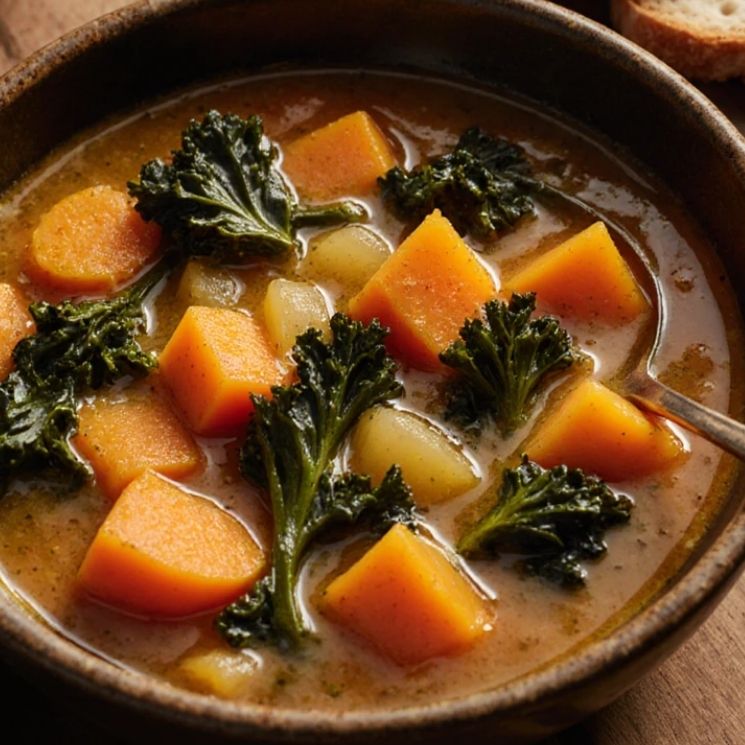
Winter Vegetable Soup: A Bowl of Warmth, Color, and Comfort
There’s something incredibly comforting about a pot of soup simmering on a cold winter day. The earthy aroma of roasted vegetables, hints of garlic and herbs lingering in the air—it’s the kind of smell that makes your home feel warmer, even before you’ve taken the first spoonful.
Winter Vegetable Soup is more than just nourishment—it’s comfort with every bite. It’s the meal you crave when days grow shorter, when you need something hearty but wholesome, something that gently reminds you to slow down.
Maybe it brings back memories of coming inside from the cold, cheeks flushed, watching steam rise from your bowl as you wrap your hands around it. Or maybe it’s a reminder that good food doesn’t have to be complicated—it just needs care, fresh ingredients, and time.
Ingredients List
This recipe serves 6–8 people and can be easily scaled up for meal prep or family dinners.
| Ingredient | Quantity |
|---|---|
| Olive oil | 2 tablespoons |
| Yellow onion (chopped) | 1 large |
| Garlic cloves (minced) | 3 |
| Carrots (sliced) | 3 |
| Celery ribs (chopped) | 2 |
| Sweet potato (peeled and diced) | 1 large |
| Butternut squash (peeled and cubed) | 2 cups |
| Parsnips (sliced) | 2 |
| Tomato paste | 2 tablespoons |
| Canned diced tomatoes | 1 can (15 oz) |
| Vegetable broth | 6 cups |
| Kale or spinach | 2 cups |
| Fresh thyme | 1 teaspoon |
| Dried oregano | 1 teaspoon |
| Bay leaf | 1 |
| Salt and black pepper | To taste |
| Lemon juice | 1 tablespoon |
Optional add-ins: white beans, lentils, pasta, or quinoa for added heartiness.
Substitutions
The charm of Winter Vegetable Soup lies in its flexibility—you can make it your own with what’s in your pantry or fridge.
- Broth: Use chicken broth instead of vegetable for extra richness.
- Vegetables: Swap parsnips for turnips, or add cabbage, rutabaga, or leeks.
- Greens: Kale is hearty and holds up beautifully, but spinach, chard, or collard greens also work well.
- Tomatoes: If you’re not a fan, leave them out or replace them with 1 tablespoon of tomato sauce for subtle flavor.
- Vegan option: Ensure broth is vegetable-based and skip any cheese garnish.
- For protein: Add chickpeas, cannellini beans, or shredded chicken.
- For flavor depth: A dash of smoked paprika or a splash of balsamic vinegar adds a cozy aroma.
“Soups are forgiving by nature—whatever you have on hand can turn into something extraordinary with the right seasoning.”
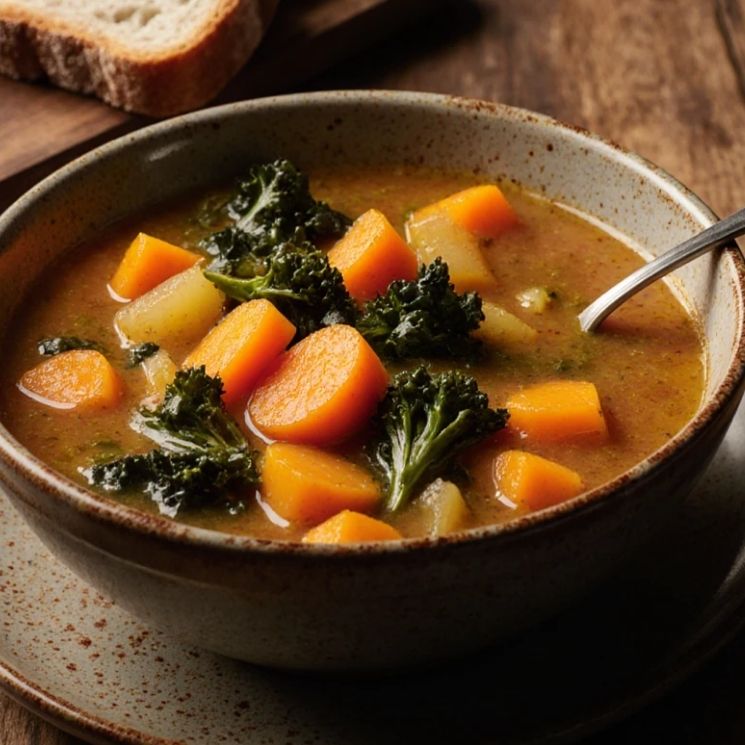
Step-by-Step Instructions
This recipe is simple, wholesome, and guaranteed to warm your kitchen.
Step 1: Build the flavor base
In a large pot, heat olive oil over medium heat. Add chopped onions, carrots, and celery. Sauté for 5–7 minutes until the vegetables soften and the onions turn translucent. Add the minced garlic and cook for another 30 seconds until fragrant.
Step 2: Add hearty veggies
Stir in sweet potatoes, parsnips, and butternut squash. Let them sauté for 3–4 minutes to develop a light caramelized edge.
Step 3: Add tomato base
Stir in tomato paste, cooking for about a minute to deepen its flavor. Add diced tomatoes and scrape the bottom of the pot to loosen any browned bits—that’s where the flavor hides.
Step 4: Pour in broth and season
Pour vegetable broth into the pot. Add thyme, oregano, bay leaf, salt, and pepper. Bring it to a boil, then lower heat and simmer uncovered for 25–30 minutes until the vegetables are tender.
Step 5: Add greens
During the last 5 minutes, stir in kale or spinach. Let it wilt gently into the soup.
Step 6: Balance the flavors
Taste and adjust seasoning. Add a squeeze of lemon juice at the end—it brightens the flavors and balances the earthy vegetables.
Step 7: Serve warm
Ladle into bowls, garnish with fresh herbs or grated parmesan, and serve immediately.
“The secret to soup isn’t in rushing—it’s in giving your ingredients time to get to know one another.”
Nutritional Information
Here’s an approximate breakdown per serving:
| Nutrient | Amount |
|---|---|
| Calories | 180 kcal |
| Protein | 5 g |
| Carbohydrates | 32 g |
| Fat | 6 g |
| Fiber | 7 g |
| Sugars | 8 g |
| Sodium | 520 mg |
| Vitamin A | 280% DV |
| Vitamin C | 80% DV |
| Iron | 10% DV |
Healthier Alternatives for the Recipe
This soup is already nutrient-rich, but you can tailor it to your diet or boost its health benefits further.
- Go low-sodium: Use no-salt-added broth and fresh herbs for flavor without added salt.
- Add protein: Toss in lentils or beans for a filling, plant-based meal.
- Use olive oil sparingly: A tablespoon is enough if you prefer to cut calories.
- Boost nutrition: Add quinoa or brown rice for texture and extra minerals.
- Skip starchy vegetables: Replace sweet potatoes with zucchini or cauliflower for lighter carbohydrates.
- Add golden turmeric: Gives the soup a vibrant color and anti-inflammatory benefits.
Serving Suggestions
Winter Vegetable Soup can stand strong on its own, but pairing it well makes it shine even brighter.
- Classic pairing: Serve with crusty French bread, garlic toast, or cornbread for dipping.
- Lighter option: Add a side salad—something crisp with lemon dressing.
- Hearty meal: Top with grated parmesan, croutons, or drizzle of olive oil.
- Extra comfort: Pair with a grilled cheese sandwich or a baked potato.
- Garnish ideas:
- A swirl of cream or coconut milk adds richness.
- Sprinkle sesame seeds or pumpkin seeds for crunch.
- Add a handful of fresh herbs like parsley or basil for freshness.
“Soup is best enjoyed with something to dip, something to sip, and someone to share it with.”
Common Mistakes to Avoid
Even the simplest soups need care. Watch out for these pitfalls to make sure your bowl is perfectly balanced every time:
- Overcooking veggies: They should be tender, not mushy. Keep an eye toward the end.
- Forgetting to layer flavor: Sautéing aromatics first gives depth that plain boiling doesn’t.
- Oversalting early: Broth naturally reduces; always adjust seasoning at the end.
- Skipping acid: Lemon juice or vinegar brightens flavors—never skip the final touch.
- Sticking to one texture: Mix different veggies for complexity and variety in every bite.
Storing Tips for the Recipe
Winter Vegetable Soup is perfect for make-ahead meals—it actually tastes even better the next day!
- Refrigerate: Cool completely, store in airtight containers up to 5 days.
- Freeze: Freeze in portions (quart bags or containers) up to 3 months. Leave room for expansion.
- Reheat: Warm on low heat on the stove, adding a splash of water or broth if it thickens.
- Meal prep: Ladle into individual jars for easy grab-and-go lunches.
- Avoid freezing leafy greens: Add kale or spinach fresh when reheating.
Conclusion
Winter Vegetable Soup is a reminder that warmth doesn’t just come from blankets or fires—it comes from a good meal made with care. The roasted sweetness of root vegetables, the comforting aroma of herbs, and the satisfaction of cooking something healthy and hearty—it’s the kind of dish that nourishes more than hunger.
This soup is a humble masterpiece—it doesn’t rely on heavy cream or complex ingredients, but on the beauty of simplicity. It invites you to slow down, savor the process, and enjoy the reward—a steaming bowl that feels like a hug from the inside out.
“When the weather turns cold, make soup—it’s one of the simplest, purest ways to feed both body and soul.”
FAQs
1. Can I make this soup in a slow cooker?
Yes! Combine everything except greens and lemon juice. Cook on low for 6–8 hours, stir in greens 10 minutes before serving.
2. Can I blend it?
Absolutely. Puree half or all of the soup with an immersion blender for a thicker, creamier texture.
3. Can I make it ahead of time?
Yes, it’s better the next day. Flavor deepens as it sits.
4. What if my soup is too thick?
Add more broth or water gradually until it reaches the consistency you like.
5. How can I make it kid-friendly?
Chop vegetables smaller and use sweet flavors like carrots and corn for easier adoption.