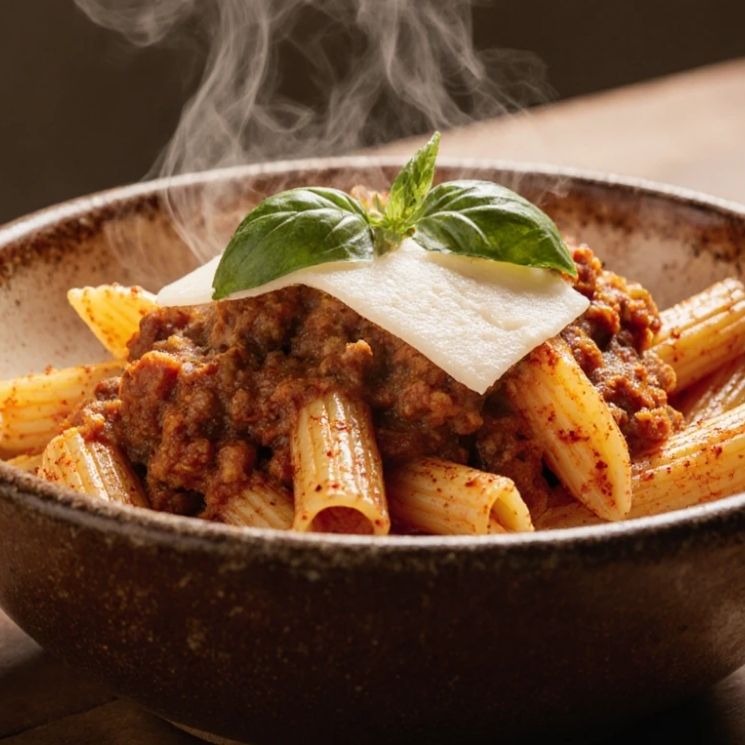
Rigatoni Bolognese: A Heartfelt Italian Classic to Savor and Share
There’s something truly special about a dish that takes time—one that fills the house with deep aromas and invites loved ones to linger around the table. Rigatoni Bolognese is exactly that kind of meal.
Maybe you’ve had a day that felt too long, or maybe it’s simply one of those evenings where you crave something grounding, something rich and familiar. The moment that hearty sauce starts to simmer—with notes of tomato, slow-cooked beef, and sautéed vegetables—you can feel life slowing down just a little.
This isn’t a fast dinner. This is comfort in the form of patience—an Italian ritual of layering flavors, stirring gently, and building depth. The magic of Bolognese comes from time, love, and the kind of care you can both taste and feel.
And when you ladle that sauce over perfectly al dente rigatoni, coating every ridged piece in rich, meaty perfection, you’ll understand why this dish has endured for generations—it’s the very definition of Italian comfort.
Ingredients List
Here’s what you’ll need to make this warm, savory dish that can easily feed 4–6 people.
| Ingredient | Quantity |
|---|---|
| Olive oil | 2 tablespoons |
| Unsalted butter | 2 tablespoons |
| Onion (chopped) | 1 medium |
| Carrot (finely diced) | 1 |
| Celery stalk (finely diced) | 1 |
| Ground beef | 1 lb |
| Ground pork | ½ lb |
| Tomato paste | 2 tablespoons |
| Crushed tomatoes | 1 can (28 oz) |
| Whole milk | 1 cup |
| Dry red wine | ½ cup |
| Italian seasoning or dried oregano | 1 teaspoon |
| Bay leaf | 1 |
| Salt and black pepper | To taste |
| Fresh basil or parsley (for garnish) | 2 tablespoons |
| Rigatoni pasta | 1 lb |
| Parmesan cheese (freshly grated) | For serving |
Optional: a pinch of nutmeg or crushed red pepper for a flavor twist.
Substitutions
Rigatoni Bolognese is adaptable enough to welcome small changes while maintaining its soul. You can tweak it to fit your pantry and dietary needs.
- Meat alternatives: Use ground turkey or chicken for a leaner, lighter sauce. For vegetarians, replace meat with lentils or textured soy protein.
- Milk substitute: Almond milk or oat milk can mimic creaminess, though traditional milk gives authentic depth.
- Wine: You can omit wine or replace it with beef broth and a dash of balsamic vinegar for acidity.
- Pasta type: Penne, pappardelle, or tagliatelle work beautifully with Bolognese. However, rigatoni’s wide tubes cling perfectly to the thick sauce.
- Cheese: Pecorino Romano provides a sharper bite compared to Parmesan.
“Cooking isn’t about exact replication—it’s about honoring tradition while making it your own.”
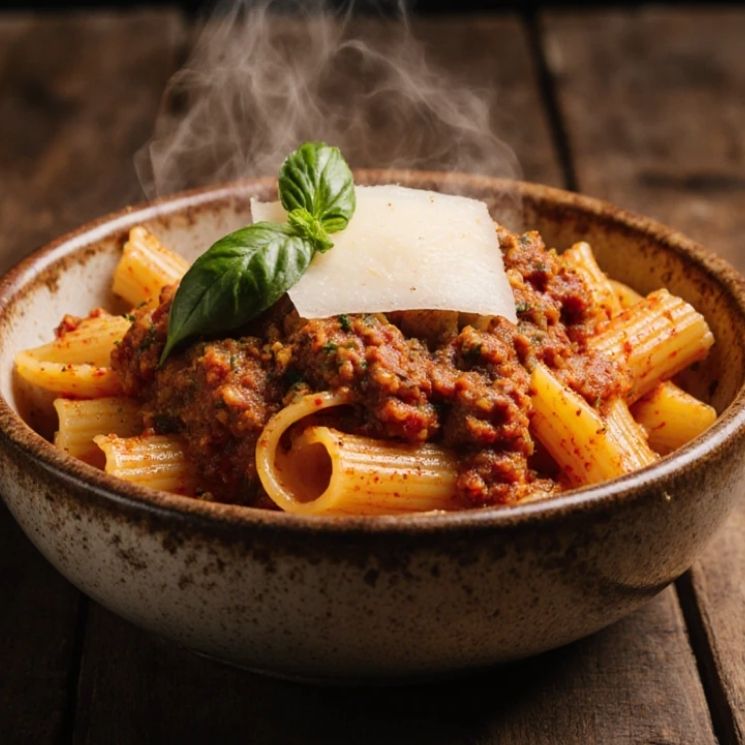
Step-by-Step Instructions
This recipe will fill your kitchen with the scent of Italy. Don’t rush it—Bolognese is best when simmered slowly, allowing each layer of flavor to unfold.
- Prepare the base vegetables (soffritto):
Heat olive oil and butter in a large pot over medium heat. Add onion, carrot, and celery. Cook for 5–7 minutes until soft and fragrant, but not browned. This forms the foundation of flavor. - Brown the meat:
Add ground beef and pork to the pot. Break the meat apart with a spoon and cook until browned. Drain excess fat if needed. Season lightly with salt and pepper. - Deglaze with wine:
Pour in the red wine, scraping up any browned bits from the bottom of the pot. Let it simmer for 2–3 minutes until the alcohol evaporates. - Build the sauce:
Stir in tomato paste and crushed tomatoes. Add Italian seasoning, a bay leaf, and milk. The milk softens the acidity of the tomatoes and enriches the sauce. Stir well to blend. - Simmer low and slow:
Reduce heat to low, cover partially, and let the sauce simmer for at least 45–60 minutes, stirring occasionally. The longer it cooks, the deeper and richer the flavor becomes. - Cook the pasta:
Meanwhile, bring a large pot of salted water to a boil. Cook rigatoni until al dente, about 10 minutes. Drain, reserving ½ cup of pasta water. - Combine and serve:
Mix cooked rigatoni into the sauce, adding a splash of pasta water if needed to loosen it. Toss until every piece is coated in that thick, meaty sauce. - Plate beautifully:
Serve hot, topped with a generous sprinkle of Parmesan cheese and fresh basil.
Nutritional Information
Approximate values per serving (based on six servings):
| Nutrient | Amount |
|---|---|
| Calories | 520 kcal |
| Protein | 34 g |
| Carbohydrates | 48 g |
| Fat | 22 g |
| Fiber | 5 g |
| Sodium | 670 mg |
| Calcium | 12% DV |
| Iron | 20% DV |
Healthier Alternatives for the Recipe
If you love Rigatoni Bolognese but want to enjoy it a bit lighter, here are a few easy swaps and tweaks:
- Use lean meats: Choose 90% lean beef or ground turkey to reduce fat content.
- Add vegetables: Blend in shredded zucchini, mushrooms, or spinach for more nutrients and fiber.
- Cut back on oil: Replace butter with olive oil or half the amount for a heart-healthier option.
- Whole-grain pasta: Swap regular rigatoni for whole-wheat or legume-based pasta to boost protein.
- Less dairy: Omit or reduce cream and cheese to make it lighter but still satisfying.
Serving Suggestions
This dish is versatile and pairs wonderfully with various sides. Here’s how you can make your Rigatoni Bolognese meal feel complete and restaurant-worthy.
- With bread: Serve with garlic bread or a warm baguette for dipping into the sauce.
- With salad: A crisp green salad with balsamic vinaigrette adds freshness to balance the richness.
- With wine: Pair with Chianti, Cabernet Sauvignon, or Merlot for a classic Italian dining experience.
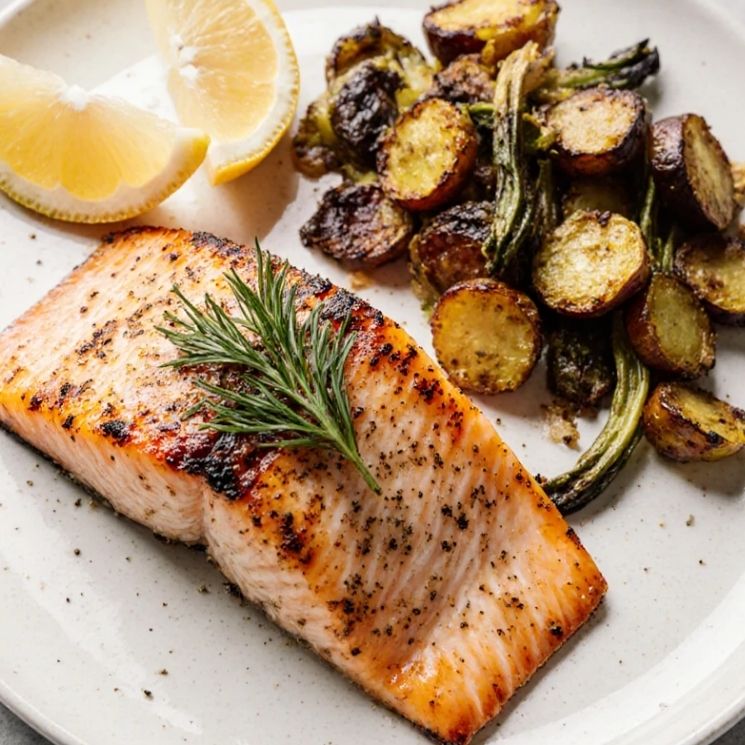
- As a full dinner: Add roasted vegetables, such as asparagus or broccolini, on the side.
- For leftovers: Turn it into a baked rigatoni by topping it with mozzarella and baking until bubbly.
Common Mistakes to Avoid
Even simple recipes can lose their spark without attention to detail. Here’s how to avoid the most common pitfalls:
- Rushing the sauce: Bolognese’s depth comes from slow cooking—don’t shorten the simmering time.
- Skipping the milk: It smooths the acidity and gives the sauce its velvety finish.
- Using watery tomatoes: Choose high-quality canned tomatoes like San Marzano for authentic flavor.
- Overcooking the pasta: Always cook it al dente, as it will absorb sauce when combined.
- Overloading with herbs or spices: Traditional Bolognese relies on balance, not bold seasoning.
“The beauty of Italian food lies in simplicity—every ingredient matters, so let each one shine.”
Storing Tips for the Recipe
Like many hearty sauces, Bolognese gets even better with time. The flavors deepen, making it perfect for leftovers or meal prep.
- Refrigerator: Store cooled sauce in airtight containers for up to 4 days.
- Freezer: Freeze in portions for up to 3 months. Defrost overnight in the refrigerator before reheating.
- Reheating: Warm over gentle heat, adding a splash of broth or water if the sauce thickens too much. Avoid overheating, which dulls the flavor.
- Make-ahead tip: The sauce can be made a day or two ahead, while pasta should be cooked fresh when ready to serve.
Conclusion
Rigatoni Bolognese isn’t just food—it’s tradition, patience, and passion in one bowl. It reminds you of why cooking matters: because food, when made with care, becomes memory.
Every forkful delivers the essence of comfort—the browned meat, the slow-simmered sauce, the pasta soaked in flavor. It’s a dish best shared, best savored, and best remembered.
So the next time you want to cook something meaningful, something that turns your kitchen into an Italian trattoria, make this Rigatoni Bolognese. It’s more than dinner—it’s the warmth of Italy, right at your table.
FAQs
1. Can I make Bolognese without wine?
Yes. Substitute with beef broth and a splash of balsamic vinegar for similar acidity.
2. What’s the difference between Bolognese and meat sauce?
Bolognese is slower-cooked, richer, and creamier due to milk—it’s not just tomato sauce with meat.
3. Can I make it vegetarian?
Absolutely. Use lentils, mushrooms, or plant-based crumbles for a hearty veggie version.
4. How long should it simmer?
At least 45 minutes, but up to 2 hours for maximum richness. The longer it cooks, the better it tastes.
5. Can I use other pasta types?
Yes. Tagliatelle, papardelle, or fettuccine are all great options for holding the thick sauce.